The Outlaw's Trail: Map of the Maine Coon Breed
The Maine Coon: Legend of the Frontier Gentle Giant
Welcome to the territory of the Maine Coon, the undisputed Trail Boss of the cat world. Known across the plains as the "dog of the cat world," these rugged outlaws are famous for their massive frames, bushy tails, and hearts as big as the Montana sky. Whether they’re supervising the homestead or chirping at the birds from the porch, a Maine Coon isn’t just a pet—they’re a loyal deputy for life.
The History & Lore: From Farm Hand to Frontier Legend
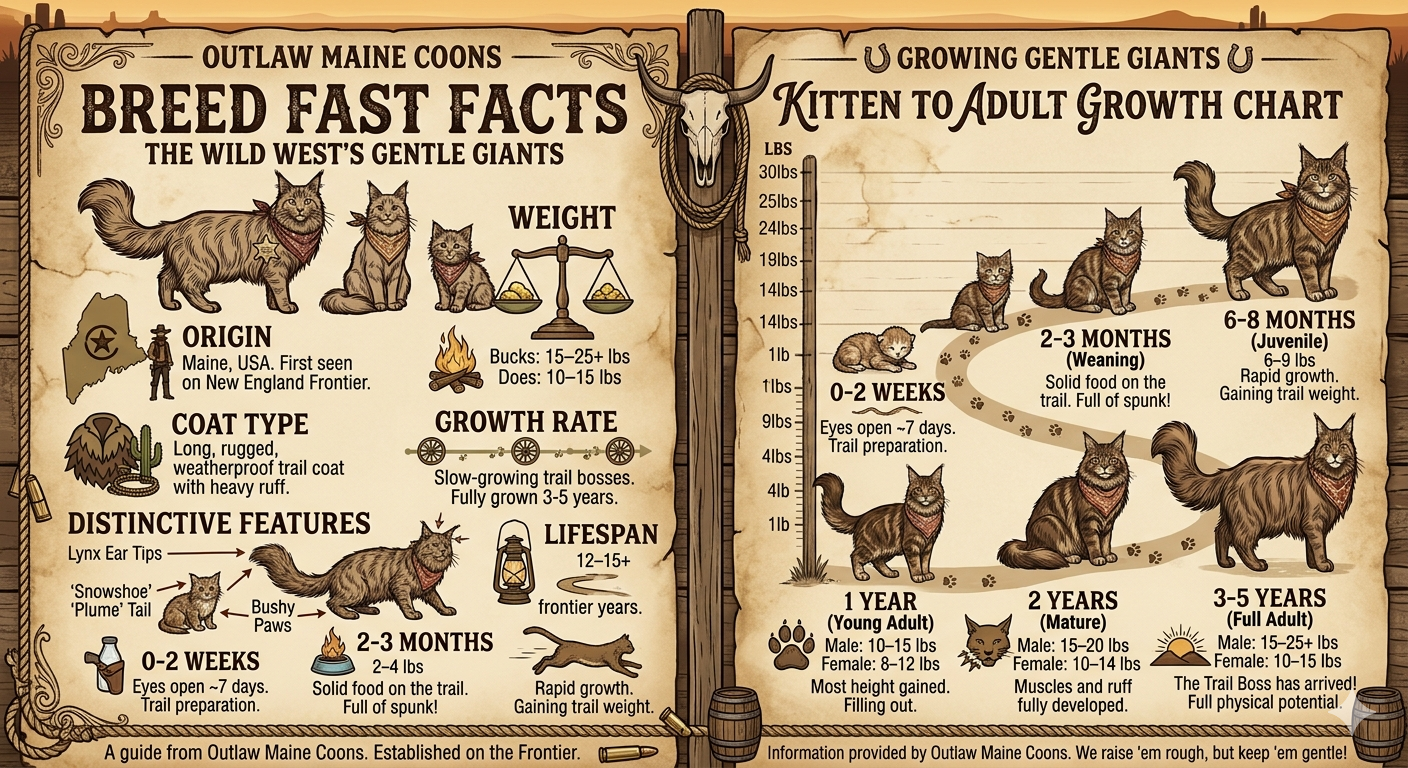
The Maine Coon is North America’s oldest natural long-haired breed, forged in the brutal winters of the New England frontier. While their exact origins are buried in the sands of time, the stories are legendary.
Myth and Folklore
The Tall Tales:
Some folks claim they’re part raccoon (biologically impossible, but that bushy tail sure tells a story).
The Royal Escape:
Others whisper they’re descendants of Marie Antoinette’s personal Turkish Angoras, smuggled across the Atlantic to the Maine coast to escape the French Revolution.
The Viking Connection:
The most likely truth? They’re descendants of rugged seafaring cats brought over by early settlers or Vikings. Over centuries, nature took its course; only the toughest survived the freezing winters by evolving thick, water-repellent "duster" coats, lynx-tufted ears, and massive "snowshoe" paws to navigate the deep drifts.
From Hired Gun to Show Stopper
Long before they were winning blue ribbons, Maine Coons were the ultimate working cats. Farmers prized them as elite mousers, keeping the grain stores safe from varmints.
- 1895: A female named Cosey took home "Best Cat" at the very first major North American show at Madison Square Garden.
State Honor:
In 1985, they were officially named the State Cat of Maine—cementing their status as a true American icon.
Personality: A True Gentle Outlaw
Don’t let that wild, rugged look fool you. Underneath all that fur is a sweet-natured companion with a temperament as calm as a desert sunset.
The Supervisor:
These cats don't care for the "loner" lifestyle. They’ll follow you from room to room like a shadow, making sure the household chores are being done right.
Intelligence:
They are exceptionally bright—you can teach 'em to fetch, walk on a lead, or even crack open a door.
The Frontier "Trill":
You won't hear much typical meowing. Maine Coons communicate with unique chirps and trills—a soft sound that’ll surprise you coming from such a large beast.
Water Lovers:
Many of these outlaws have a strange fascination with water. Don't be surprised if they try to join you in the wash or splash in their water trough!
Family Deputy:
They are patient with the "calves" (children) and get along famously with other pets, including dogs.
Health & Longevity: Keeping Your Trail Boss Fit
Even the toughest outlaws need a good medic. While Maine Coons are robust, keeping them on the trail for 12 to 15+ years requires knowing the territory.
- Heart Health (HCM): Hypertrophic Cardiomyopathy is a thickening of the heart muscle. We prioritize DNA testing to ensure our lines stay strong.
- Hip Dysplasia: Due to their massive frame, they can be prone to hip issues. Keeping them at a healthy weight prevents them from developing a "wobbly" gait.
- Spinal Muscular Atrophy (SMA): A genetic condition affecting the nerves. It isn't painful, but it can affect their mobility on the trail.
- Kidney Health (PKD): Inherited cysts in the kidneys are a known concern that responsible breeders keep a sharp eye on.
Frontier Fuel: Nutrition for a Giant
Maine Coons are "slow-growers," taking up to 5 years to reach their full "Trail Boss" size. They need the right fuel to build that muscle.
The Protein Trail:
They need a high-protein diet (at least 35–40%) to maintain their lean, muscular build.
Coat Support: Omega-3 and Omega-6 fatty acids (like salmon oil) are the secret to that water-resistant triple coat.
Taurine:
A non-negotiable amino acid for heart health and sharp eyes.
Weight Management:
Even a giant shouldn't be carrying extra baggage. Obesity puts strain on the hips and heart, so keep 'em lean and active.
Grooming: Caring for the Trail Coat
That iconic triple coat is built for the elements, but it takes some work to keep it from matting up like a tumbleweed.
The Brushing Routine:
Aim to brush your outlaw two to three times a week. During the spring and fall "coat blow," daily brushing is best.
The Toolkit:
Steel Comb:
Your best friend for getting through the thick undercoat and "britches" (back legs).
Slicker Brush:
Great for clearing out loose fur and trail debris.
De-shedding Tool:
Perfect for thinning the undercoat during seasonal changes.
Bathing:
Believe it or not, many Maine Coons don't mind a bath. It keeps their oily, water-repellent fur from getting stringy.
Sanitary Trims:
Keep the fur around the "britches" trimmed short to ensure they stay clean after using the litter box.
Ear & Paw Care: Keep those ear tufts and "snowshoe" toe feathers clean of wax and litter.
Pro Tip: Start grooming your outlaw while they’re still a "young’un." Turning brushing into a ritual with treats and praise makes it a bonding experience rather than a showdown!
A Note for Future Owners: Bringing an Outlaw Maine Coon into your home is a long-term commitment to a loyal, vocal, and incredibly affectionate deputy. They don't just join your household; they become the very heart of the ranch.